


It Started On The Streets...
Jul 24, 2026When I was a teenager, I had a “street mum”, who had a rickety house and took in homeless kids. She had ten youths in her care.

And she believed in dreams.
Most mornings, we walked all the way down a very long, thin street to a corner
shop for smokes and milk and white bread, and she tells me about her dreams,
and she tells me to follow my dreams.
When she speaks about dreams, she comes alive. Her dark blue eyes light up.
All her teeth show when she smiles. She has a husky laugh from years of
tobacco and weed. And she speaks deliberately. She thinks about all the things she says.
She thinks about everything.
About the vastness of the limitless sky and a million burning stars. About the
injustice of abusive parents. About the power one person has, to change the
world. About wild horses, and the baked lyrics of the Red Hot Chilli Peppers,
and about creating a new advocacy system for homeless kids.
And when I dream with her, I remember my love for writing, creating and
dancing, and I dream of changing the world. And I dream of growing up, and
having a family, and being just like her.

One summer morning, she tells me about hippies homeschooling their kids in
a farm community out in the sticks. Far away from the violence we know. She
tells me that they are surrounded by fields of soft grass, twirling vines of ripe
tomatoes, tall sunflowers and the hot white sky.
I decide. When I grow up. I’m going to homeschool my children.
When I was twenty years old, I had my first child.
I found out I was thirteen weeks pregnant when going for an Xray on my back;
following weeks of unexplained back pain, and my refusal to take part in the 6am hill walks.
I was alone when I found out. No one congratulated me, and I felt sick to my
stomach. I didn't need the Xray for my back anymore... the cause now
apparent. I returned home that afternoon- to my room in a women’s rehab-
and after the shock wore off, I worked up the courage to tell one of my friends
the secret. She hooted with joy.
Later, she even helped me name him.
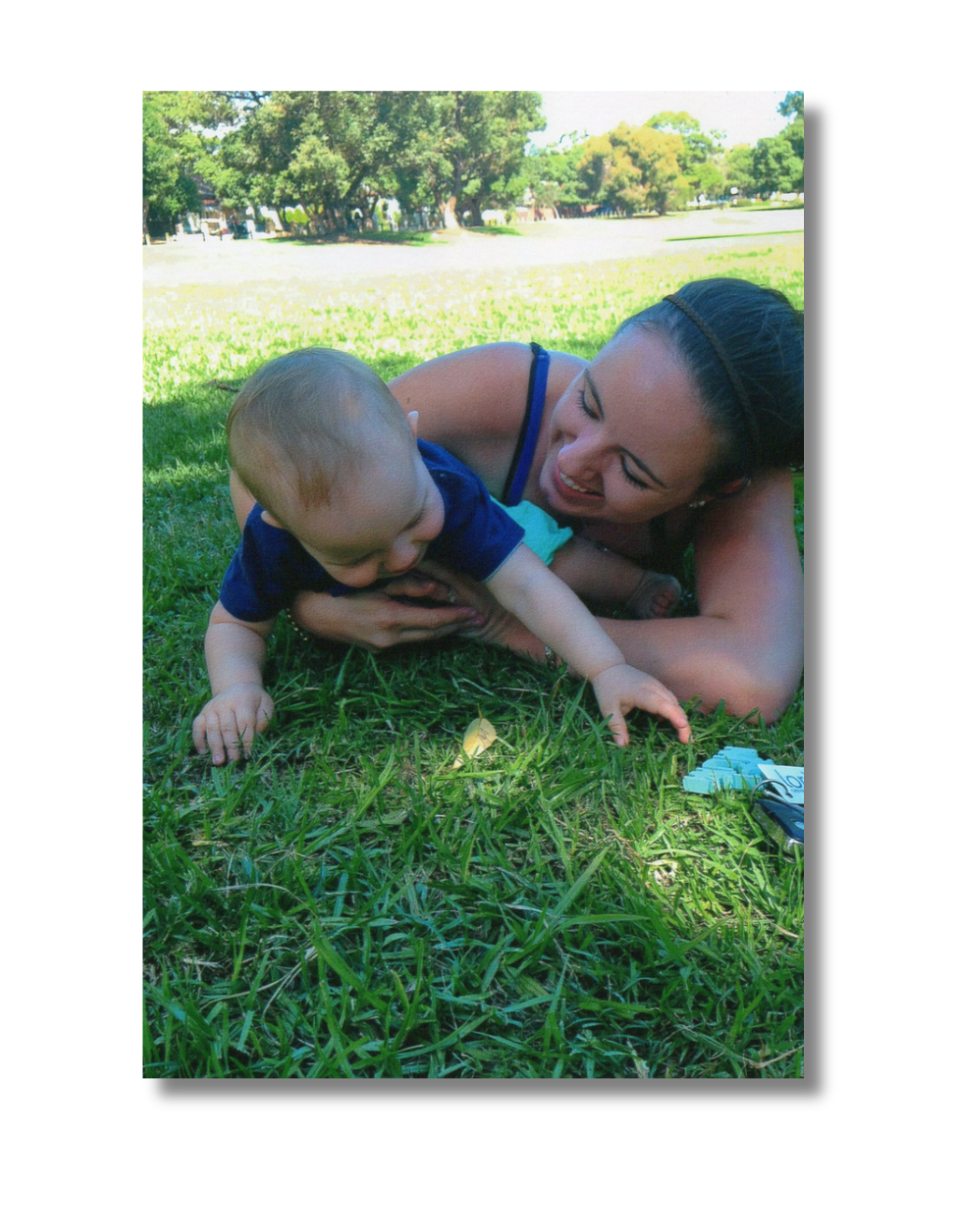
After he was born, I finished rehab and rented out a tiny bottom floor apartment
opposite a large park. It was my very own. For the very first time.
There were trees outside every window, and all the bare brick walls were white.
A owned a small collection of items, including a thin white cot, a cast-iron bed,
an Ikea hallway rug, and a green camping chair. My quiet, elderly neighbour sat
in a chair by his door every morning, watching families walk past with their dogs.
He always smiled kindly.
Soon after I moved in, I was gifted a job for a lawyer friend of mine. She let
me sweep the floors and do the coffee runs. My son went to the childcare at
the end of my street for a few half-days each week.
& I loved it. I loved the opportunity to go to a real job in the city, to wear smart
clothes for my real job, and I loved that someone trusted me to do this work.
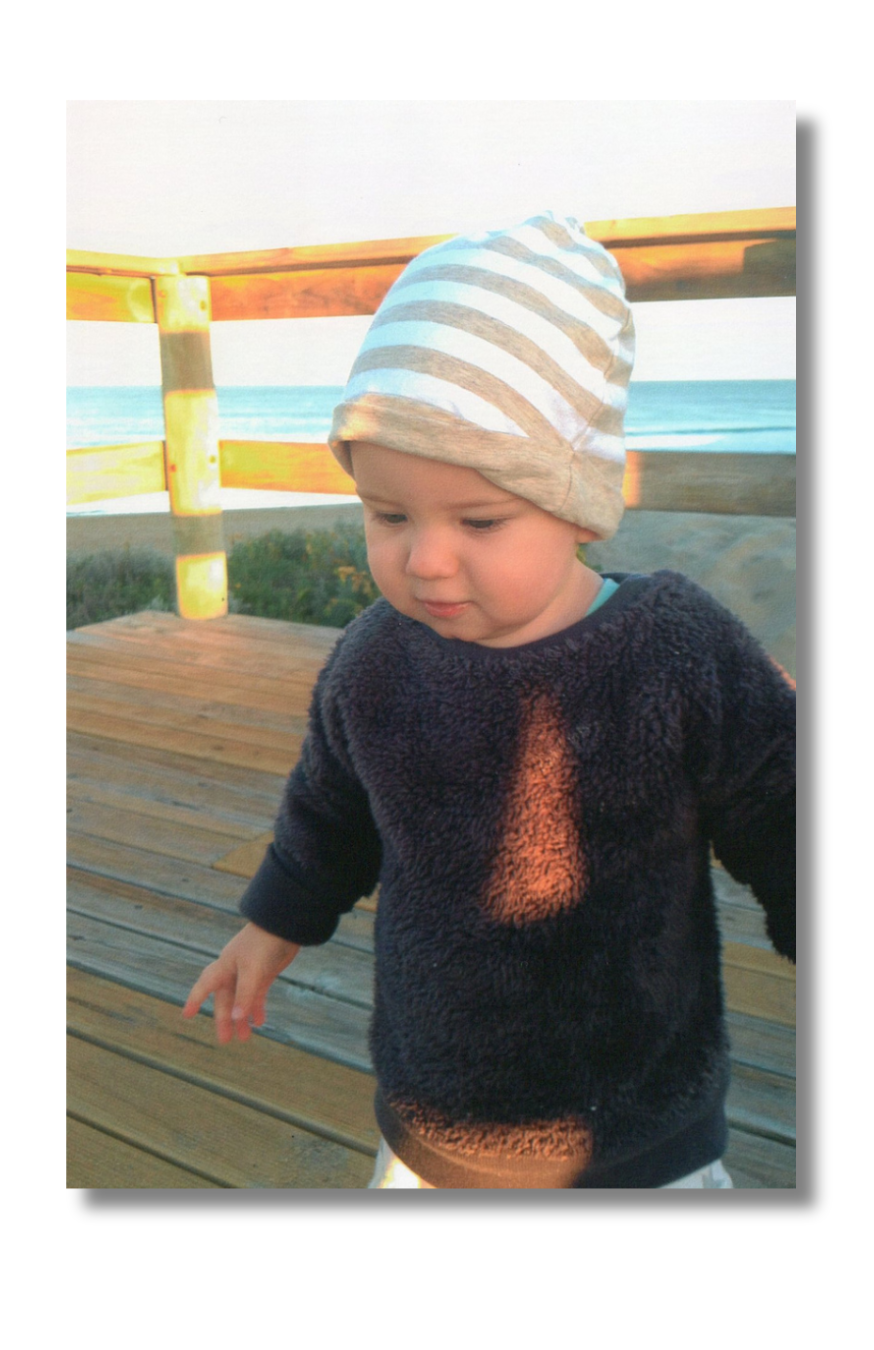
But when I picked him up at the end of the day, he was miserable.
Weeks of sleep regression, clinginess, food refusal, tears and tantrums,
and I couldn’t choose my job over my son anymore. I had to be home with him.
At the time, I wondered if I was done something wrong. Everyone around me seemed to believe childcare was simply part of growing up.
Maybe I needed to be stronger😭
Maybe he needed to be better at separating from me.
But when I started studying childhood development, I discovered something that completely changed how I understood what I was experiencing with my son, and looking back now, I don't see a child who 'couldn't cope with childcare.’ I see a little boy communicating exactly what his nervous system was already telling him.
Being apart from his family wasn’t the BEST opportunity for him.
Researchers spoke about childcare extensively
in the book Better Late Than Early by Raymond S Moore.
Developmental psychologists and reading specialists worked with leading brain specialists
and psychologists to see if their independent conclusions would be similar when studying
the same group of children. They conclude that there is no evidence to support the need
for preschool for a child who has a good home, and that every effort should be made
to keep a child’s life quiet, simple and uncluttered at home with his parents.
So why does everyone around us act like daycare is expected?
Even necessary, normal, and good?
But I was troubled by this idea, and went on to discover that there is a great
deal of research to support no formal schooling/ childcare for children
younger than eight to ten.
In one example, Dr. David Metcalfe (University of Colorado Medical School):
found that hemispheric "division of labour" in the brain is typically established
between ages 7–9. Neurologically, the brain isn't organized for formal learning until around that age.
Interestingly, in a Rosenzweig's Berkeley rat study: rats raised in natural/enriched
environments developed measurably better brain myelination than those in sterile lab
cages, used as supporting (if indirect) evidence that freedom and natural environment,
not structured stimulation, produce better brain development.
And when it comes to reading, Joseph Wepman (University of Chicago): found
some children can't reliably distinguish and remember similar sounds until the end
of their eighth year: an auditory-readiness finding, not just visual.
But for some reason, so much research is being largely ignored as school age
starts earlier, and the expectation that children should know more and be
better, earlier, remains prevalent.
Experts who talk about school readiness in Australia claim that a four-year-old
should be able to manage feelings and separate from parents in order to be
ready for prep. Their conclusions clearly insinuate that if your child isn't "ready",
you are doing something wrong, or you could be doing something more.
So let me put your mind at ease😇
It is not "normal" for children to be distressed when saying goodbye.
The research outlines that:
- Birth–3: "greatly damaged by separation from his parents"
: the most severe window. - After age 5: "vulnerability to parental separation declines slightly"
: so, there's improvement, but only slight. - Ages 5–8: "still unable to adjust properly to separations"
: explicitly stated as a window where separation is not yet handled well. - Up to age 10: "many children can experience maternal deprivation until age 10"
: the outer edge of the vulnerability window.
Children need close adult relationships until their IML (Integrated Maturity
Level, defined as 8–10). After IML is reached, "and they can reason, impartial teachers are okay."
Simplified; no school before 8–10, and even then, it depends on the security of the prior attachment.
This new information prompted me to stop working and try my hand at setting
up some income streams from home. I focused on my personal growth,
creating a life for my son and I that I was proud of, building a community,
gaining new skills in homemaking and motherhood, and learning about
childhood development and wellbeing.

If your four-year-old cries at drop-off. If eight sounds outrageous compared to
what the government is telling you. If you've been wondering whether you're the
one doing something wrong because your kids don’t seem ready for school, I want
you to remember this instead: the research and the ancient wisdom was there
long before our Early Years Framework was.
You're not behind. You're not doing it wrong.
But let me tell you something vulnerable for a moment.
Even though I never wanted to go back to a model of care based outside the
home- not for childcare, not for prep, not for the years that followed- I did.
Let me explain...
Up Next: Join The Newsletter Below
What's landing in your inbox:
- It Started on the Streets… (an unlikely origin story)
- I Sent Him to the Hills (the homeschool journey truly starts)
- Outlandish Crisis (country life and crisis in WA)
- Homeless, or Adventurers & Explorers? (the travellers life in Tasmania)
- My Mother & The Education Department Investigation (the big battle)
- I’m Basically a Mountain Goat Now (from the freedom side)
- I Almost Lost Our Homeschool Registration Overnight (cruising the east coast, setting down rural roots in NSW)
- Seeing it Through (the OG source of motivation for the visionary set)
- Tears on the Tomato Sauce (honest moments that matter)
These stories & more!👀
30 Days of Honest Stories
Join The Australian Homeschooling Newsletter™
The real wins, the hard days, and the research that mainstream educators skip.
Stories & Research Delivered Every Other Day